
School Nurses: Big Roles and Limited Resources
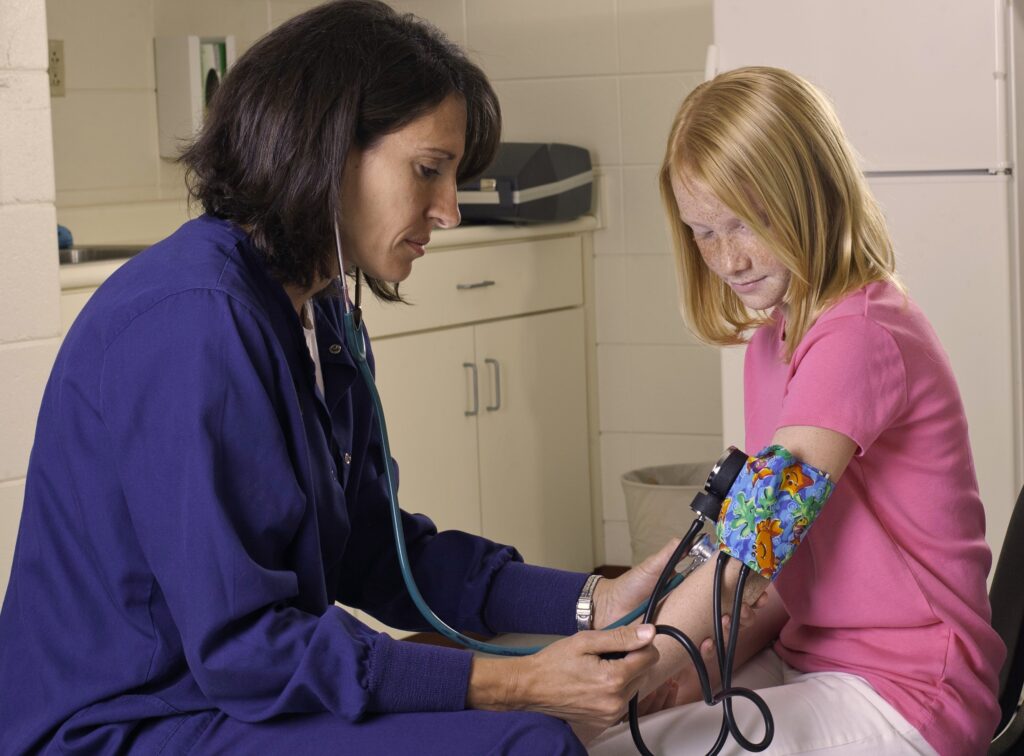
The school nursing position has become more complex as learning environments have evolved over time. Today their role extends far beyond bandaging scrapes or handing out medications. According to the School Nursing Practice Framework, expectations include care coordination across physical and mental health, leadership of campus-wide programs and district-wide health advocacy, development and coordination of emergency response plans, and that just scratches the surface. Their impact is apparent on campus and even outside the school, as every dollar spent on school nursing saves society two dollars and twenty cents according to the CDC.
However, the scope and importance of their role are often mismatched with the resources they are given. Budget constraints and limited funding have made full-time nurses a luxury in many school districts, not a standard. Nationally, 35% of schools operate with part-time nursing staff. In western states, it’s at a whopping 51%. In many instances, nurses are shared across several campuses due to funding constraints. In Texas, 30% of school nurses operate across multiple campuses Texas Department of State Health Services. As a result, these staff are stretched thin, responsible for hundreds or even thousands of students across multiple sites.
Health Emergencies and Resource Challenges
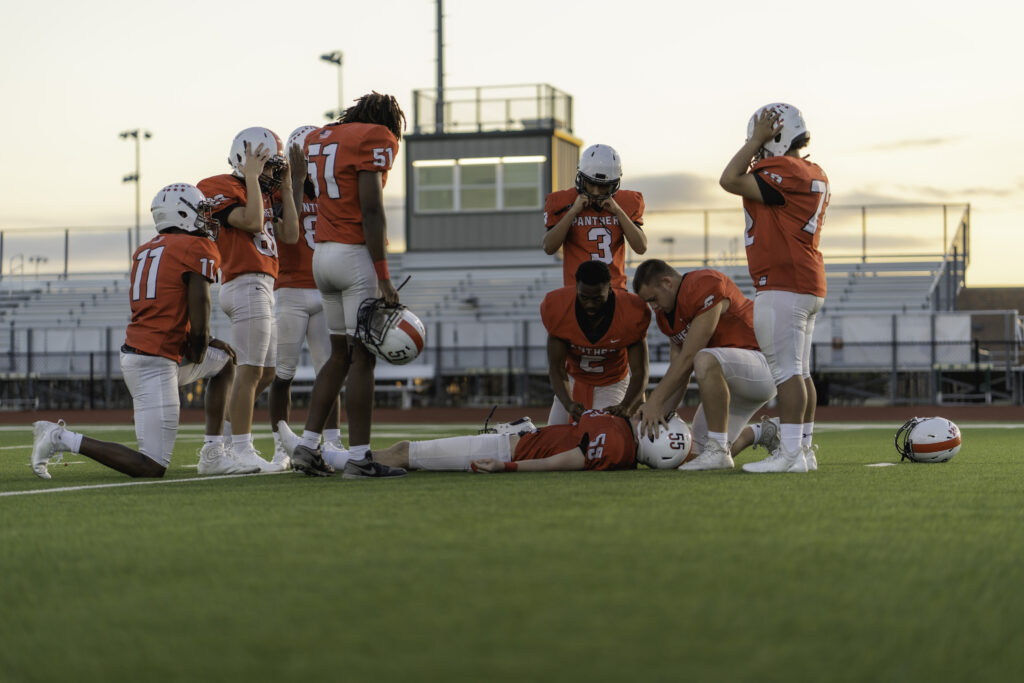
It’s clear school nurses do a lot, and they can’t always be at the right place when needed, especially when shared by multiple sites or operating part-time. This is a challenge in the context of health emergencies, which are notoriously unpredictable and can happen anywhere at any time. The American College of Cardiology puts the chances of sudden cardiac arrest (SCA) in a high school campus at 1 in 25 . Part of the school nurse’s job is developing and coordinating the execution of school emergency response plans. But what happens if the nurse isn’t there to handle the emergency? In the cases of Brock Ruether and Adam Lemel, low bystander/faculty awareness led to tragic outcomes.
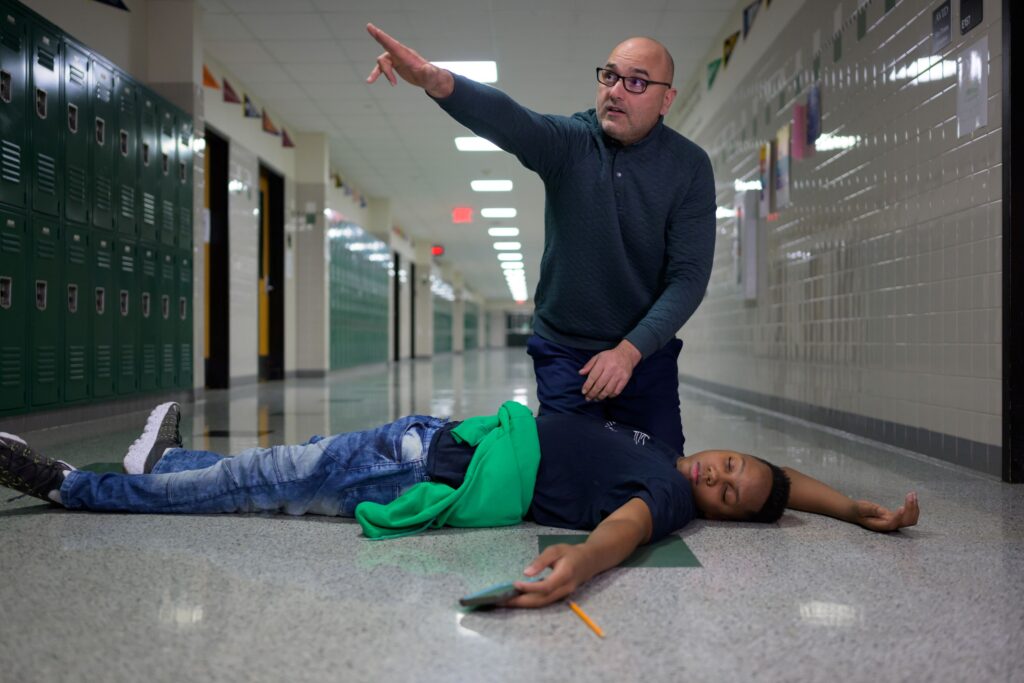
But a nurse being at the scene isn’t a silver bullet, either. Think about all the steps involved in responding to a typical SCA event. A student or adult collapses. Someone needs to take control of the scene and clear the room of students. One person needs to call 911. Another needs to retrieve the AED. And another person needs to provide CPR. Depending on how long EMS takes to arrive, the CPR could go on for tens of exhausting minutes. The CPR provider will a substitute to assist. Altogether, that could be upwards of 4-5 different roles happening almost simultaneously. Relying on a single person, no matter how skilled, puts the person at further risk when seconds count.
So how do we address these challenges? Fire emergency response faces many of the same types of challenges as described above, but schools have implemented plans and highly structured divisions of responsibilities to create smooth experiences that minimize the chances of complications. One faculty member, maybe a principal or nurse, isn’t responsible for everything. There’s a school emergency response team (SERT) ready to distribute the load. The leader might design the plan, and coordinate the drills, but they can trust their team to act when the time comes.
By leveraging the same principles and design ideas, your school nurse can have their expertise and impact multiplied by leading a cardiac emergency response team. This structure benefits everyone involved. For the nurse, it lightens the immediate burden and reduces stress, knowing there’s a trained, responsive team in place. Faculty and staff gain confidence from clear roles and practice scenarios. Most importantly, the student experiencing the emergency receives faster, more coordinated care.
Cardiac Emergency Response Plans
In the case of cardiac arrest, this approach is formalized in what’s called a Cardiac Emergency Response Plan (CERP). A CERP outlines a step-by-step protocol for how a school community should respond during a cardiac event. It includes designated roles, communication flow, AED locations, training schedules, and regular drills to ensure readiness.
Some states have already mandated CERPs as part of school safety regulations, and that list is growing every year. If your school isn’t yet required to implement a CERP, it’s still worth exploring. Being proactive in developing a response plan can bridge the gap between staffing limitations and lifesaving readiness.
Developing and implementing a CERP may sound like a significant undertaking, especially for schools already managing limited resources. Fortunately, help is available. The American Heart Association offers free tools and templates to guide school nurses and principals in creating and maintaining an effective Cardiac Emergency Response Plan. These resources include checklists, role assignment tools, training guides, and communication templates to simplify the process.

For schools looking for more hands-on support, the American Heart Association also provides expert-led services that can take the pressure off your administrative team. These services allow your staff to focus on what matters most, caring for students, while ensuring your school is ready for cardiac emergencies with a professionally developed and supported plan.
In the end, school safety depends on more than alarms and drills, it hinges on having skilled, prepared individuals in place for every type of emergency, especially health-related ones. By recognizing the crucial role school nurses play, providing them with the support they need, and implementing team-based response systems like CERPs, schools can dramatically increase their ability to protect students when it matters most.
Not sure where your school stands in terms of emergency preparedness? The Heart Association offers a quick quiz to assess your readiness. It’s a simple but effective way to identify gaps, celebrate strengths, and make informed decisions about how to move forward.