By D.R. Walker
It’s Friday, we’re on virtual meeting, and I can see, through the driver door window of the ambulance, a harsh, filtered sight of the grit of the New York morning and the exhaustion of a twelve-hour shift.
Jessica Pringle, known to the streets and the crew as “Pringle,” sits in the driver’s seat. She is a woman composed of equal parts steel, scars, and an unsettlingly vibrant joy.
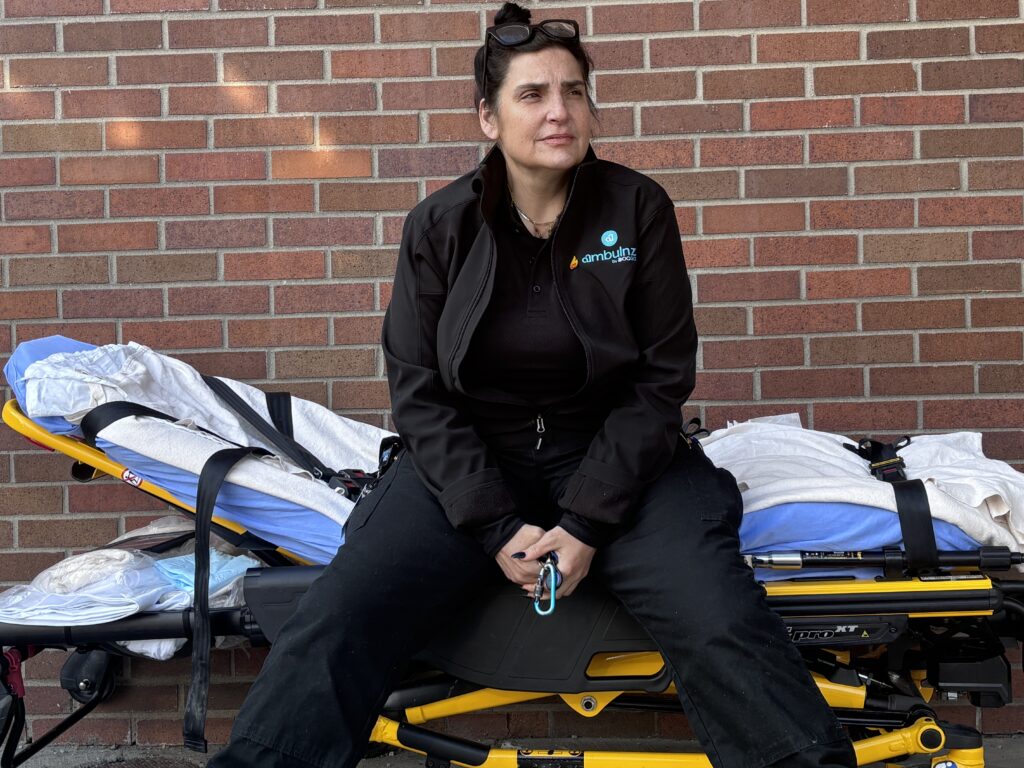
“Tell whoever you report to that they should pay you more and give you the rest of the day off,” I tell her, watching her breathe through the screen. She laughs, a sound that feels like a victory, despite having spent the last few hours wrestling a psychiatric patient to the floor of a moving rig in a “Code 3” emergency.
While many would be broken by such a morning. Jessica Pringle is just getting started. She is part of the “Geriatric Crew,” the seasoned veterans of the road, and she is perhaps the most unlikely EMT in the state of New York. Because before she was the one holding the life-saving equipment, she was the one lying on the asphalt.
The Pothole at the End of the World
In 2012, Jessica Pringle was not a hero. She was a graphic communications graduate working in a dialysis unit, living a predictably life. Then came a motorcycle, a high rate of speed, and a pothole that acted as a symbolic portal to the afterlife.
“I saw the curb in the headlights,” she recalls with the clinical detachment of a survivor. “And I said, ‘Well, this isn’t going to work out well.’ I don’t remember anything else after that.”
The impact was violent. Her right leg was instantly severed. Her heart stopped. In the eyes of the law and biology, Jessica Pringle was gone. But the universe provided a variable she hadn’t accounted for: a stranger. An “everyday citizen” who had taken a CPR class just four months prior. He didn’t have a badge; he just had the audacity to believe death could be negotiated with.
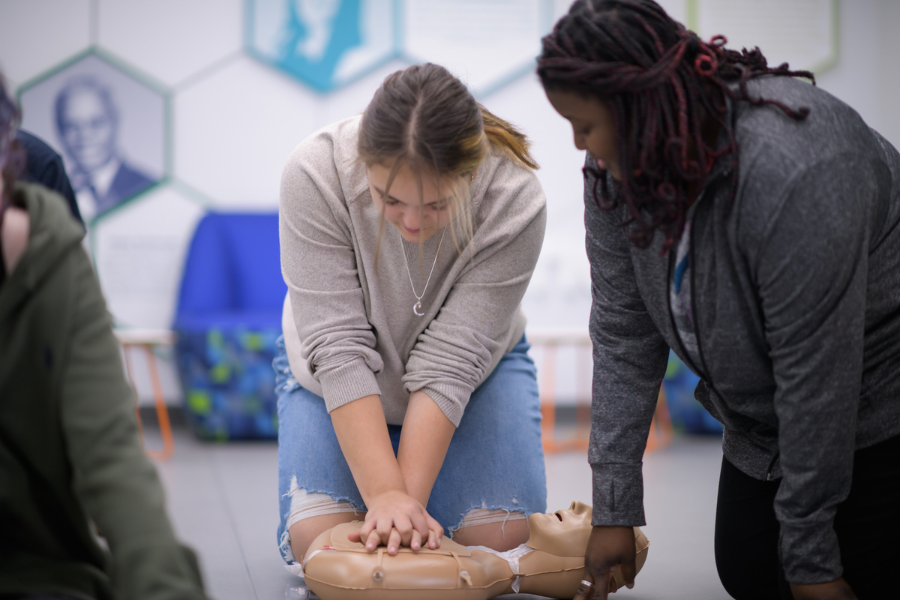
“The doctor told me, ‘An everyday guy saved you. He did CPR on you while you were down.’ I said, ‘Are you kidding me?’ Right then, I said, ‘Well, now I want to be a CPR Instructor. I want to tell people that you can do this, no matter who you are.”
Trying again…again
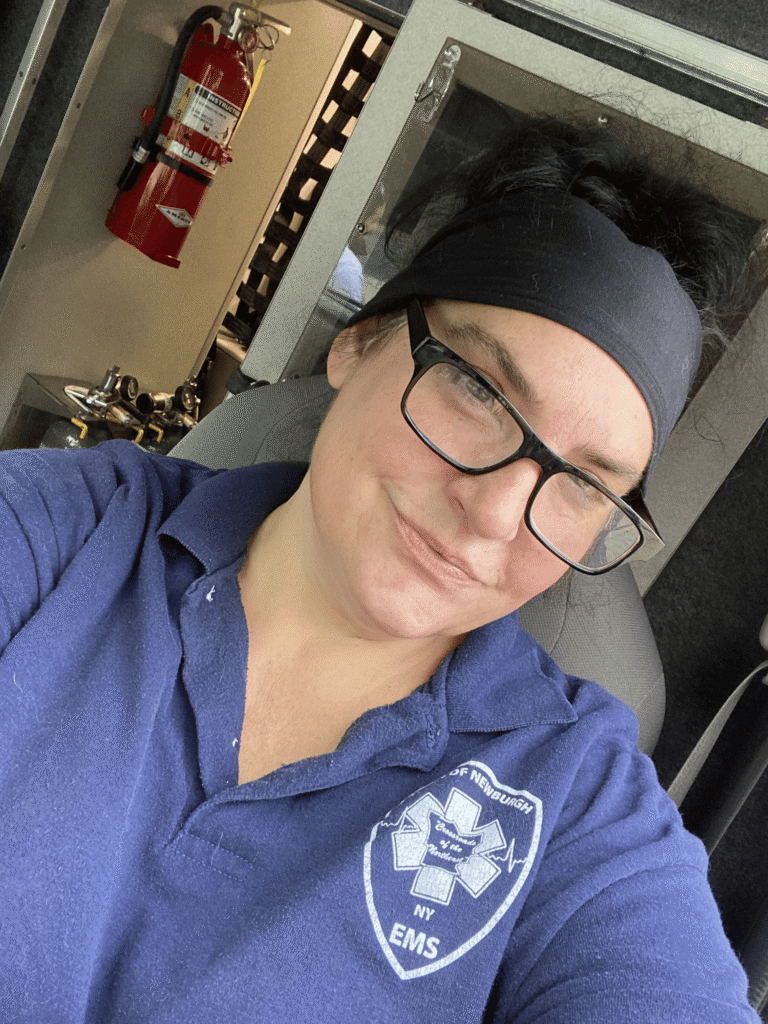
Pringle’s recovery was a year-long siege. She spent 364 days in rehab, relearning the basic mechanics again. She even named her prosthetic leg “Roger,” a nod to the stubborn partnership she now shares with a piece of titanium.
Her true evolution was internal. She moved from the administrative desk to the back of the ambulance, fueled by the “Rescuer Remorse” she saw in others and the skepticism she saw in the public. She realized that the greatest barrier to saving a life isn’t a lack of medicine, it’s a lack of confidence.
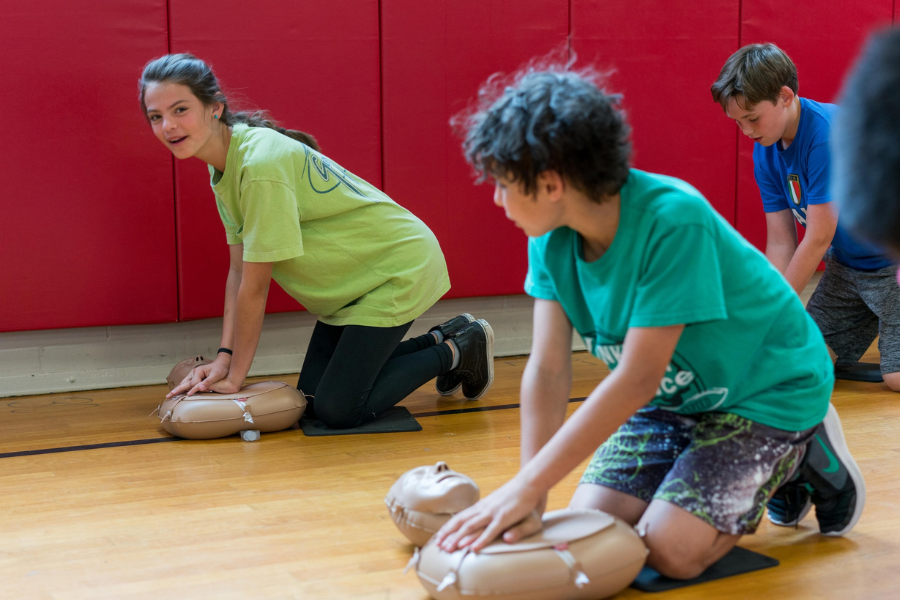
“I tell my classroom, ‘If you just try, you don’t have to be perfect. Just try. Give them a chance. You’re doing 98% better than they would have done if you just said, I’m scared.'”
She addresses the fears that paralyze the average person: the fear of being sued, the fear of “mouth-to-mouth,” the fear of the “gross” reality of trauma. She counters them with the bluntness of someone who has felt the ribs crack under the weight of a miracle.
“I want them to go into it saying, ‘Hey, this Instructor who taught me how to do this has this life experience. She’s here laughing and teaching us.’ I want them to understand that CPR, at the end of it, is more beneficial than being scared of it.”
The Legacy of a “Stern Face”
Pringle is now a spokesperson for the radical idea that life-saving is a civic duty, not a professional privilege.
“Why wouldn’t you do CPR?” she asks. “If you are a school teacher and a kid goes into anaphylactic shock, do you freak out, or do you take that stern face and smile and say, ‘This is what I’m going to do’?”
As social detachment is increasingly normalized, Pringle is an advocate for the “tiny little connection.” She speaks to her patients, even the ones who are unconscious, with a compassion born of having been in the void herself.
“I’m here because you don’t feel good. And it might take that one little tiny spark that makes them go, ‘Maybe I’ll be okay.’ I’ve had patients say, ‘My life is terrible.’ I tell them, ‘Listen, I died in a motorcycle accident and I’m here helping you. Let’s get through this.'”

From Survivor to Lifesaver
As our interview draws to a close, Pringle is still sitting in that ambulance. The radio crackles. There are more calls to answer, more “Code 3s” to navigate, and more lives hanging by the thin thread of someone else’s willingness to try…again.
Jessica Pringle is not only survived. She refused to let her survival be a one act play. She has turned her trauma into a training, her prosthetic into a philosophy, and another chance into a tree of one thousand chances for people she will never meet.
When asked for her final message to the world, her “key message to humanity,” she doesn’t start with a medical textbook. She reaches with the heart.
“If you at least try, you’re giving that person a chance of life,” she says, the siren of a nearby rig beginning to wail in the distance. “I can’t say it any simpler.”
In the economy of the humanity, Jessica Pringle is the ultimate investor.
She knows exactly what life is worth, because she had to earn hers back, one beat, one compression at a time…again.